
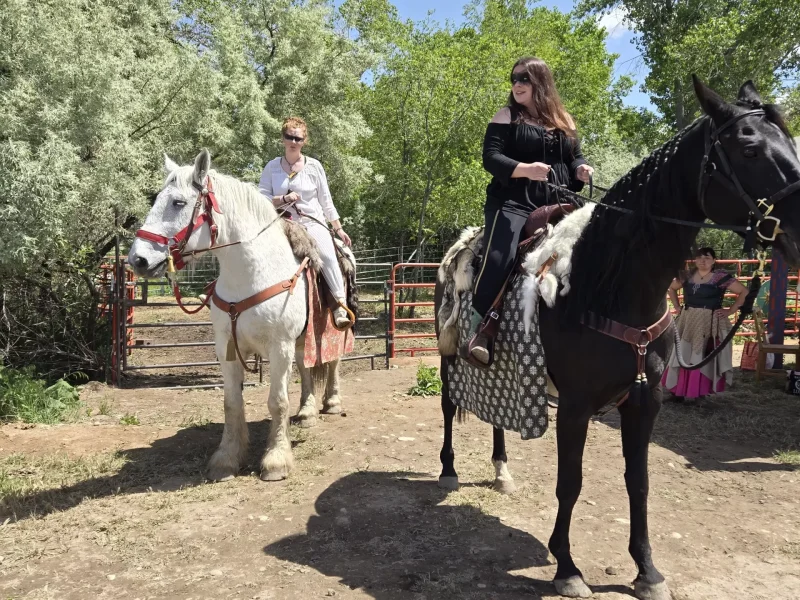
When people think about horseback riding lessons, they often picture a student climbing into the saddle and learning how to steer, stop, and ride around an arena.
That is part of it, but good riding lessons teach much more.
Horseback riding is not only about sitting on a horse. It is about learning how to communicate, stay balanced, build trust, understand the horse, and make safe decisions. Riders also learn patience, responsibility, and respect.
At Riders of the Mark, students have the chance to grow both in and out of the saddle. These lessons can help riders become more confident, capable, and comfortable around horses.
Riders Learn How to Communicate With a Horse
Horses do not understand people the same way another person would.
They respond to body position, pressure, movement, voice, and timing.
That means a rider has to learn how to communicate clearly.
For example, a rider may use the reins, legs, seat, and voice together to ask the horse to move or change direction. If those signals are confusing, the horse may not understand what the rider wants.
Learning how to give clear signals takes practice.
Riders also learn how to pay attention to the horse’s response. If the horse slows down, changes direction, or becomes tense, the rider has to notice and make adjustments.
This type of communication helps riders become more aware and focused.
Over time, students begin to understand that riding is a partnership.
They are not simply telling the horse what to do. They are learning how to work together.
Horseback Riding Builds Balance and Body Control
Riding a horse requires much more balance than many beginners expect.
A horse is always moving.
Even at a walk, the rider has to stay centered while the horse moves underneath them.
This helps riders develop stronger balance, posture, and coordination.
Students learn how to keep their body in a stable position without becoming stiff.
They may work on:
- Keeping their shoulders relaxed
- Sitting evenly in the saddle
- Keeping their legs in the proper position
- Looking where they want to go
- Using their core for better balance
- Moving with the horse instead of fighting the motion
These skills take time to develop.
A rider may feel awkward at first, but with regular lessons, the movements often become more natural.
Better body control also helps riders become safer and more confident.
Students Learn Responsibility Around Horses
Horseback riding comes with responsibility.
Horses are large animals that need proper care, attention, and respect.
Riding lessons can help students understand that working with horses includes more than the fun part of riding.
They may learn about grooming, basic horse care, equipment, safety, and how to act around horses.
For younger students, this can be especially valuable.
They begin to understand that animals depend on people to make good choices.
That may include handling equipment correctly, listening to instructions, moving safely around the horse, and treating the horse with patience.
These lessons can carry over into everyday life.
Students may become more responsible because they understand that their actions affect another living animal.
Riding Lessons Can Build Confidence and Patience
Learning to ride does not always happen quickly.
Some skills may feel easy, while others take time.
A student may need several lessons to feel comfortable with a new movement or riding exercise.
That teaches patience.
Riders learn that improvement comes from practice.
They also learn that mistakes are part of learning.
Maybe a turn does not go as planned. Maybe the rider loses balance for a moment. Maybe the horse does not respond right away.
Instead of giving up, the rider can try again.
That process can build confidence.
Each small success matters.
A student may feel proud after steering correctly, completing an exercise, or staying calm during a challenging moment.
Those wins help riders trust themselves more.
Some important life skills students may build through riding include:
- Patience
- Focus
- Problem solving
- Confidence
- Responsibility
- Self control
- Persistence
These skills can benefit riders both at the barn and away from it.
Riders Learn to Understand and Respect Horses
One of the most important parts of horseback riding is learning how horses think and behave.
Horses communicate through body language.
Their ears, eyes, head position, movement, and overall behavior can give clues about how they are feeling.
Riders learn to pay attention.
A horse may be relaxed, curious, distracted, nervous, or unsure.
Recognizing those signs can help riders make safer decisions.
It also teaches respect.
Students begin to understand that every horse has its own personality.
Some horses may be calm and slow. Others may be more sensitive or energetic.
Learning to work with different horses can make students more adaptable.
It also helps them understand that a good rider does not force every horse to behave the same way.
Instead, riders learn to communicate clearly and respond to the horse in front of them.
Riding Lessons Help Create Well Rounded Riders
The goal of horseback riding lessons should not only be to teach someone how to stay on a horse.
A strong rider understands safety, communication, balance, responsibility, and horse behavior.
Those skills work together.
A student who understands the horse may communicate more clearly.
A rider with better balance may feel more confident.
A confident rider may be more willing to try new skills.
That is why riding lessons can be such a valuable learning experience.
At Riders of the Mark, students can build their skills step by step while learning what it truly means to work with horses.
The saddle is only one part of the experience.
Every lesson offers an opportunity to learn something new, whether it is about riding, horses, or even yourself.
If you or your child would like to learn more about horseback riding and horsemanship, Riders of the Mark can help you begin the journey.