
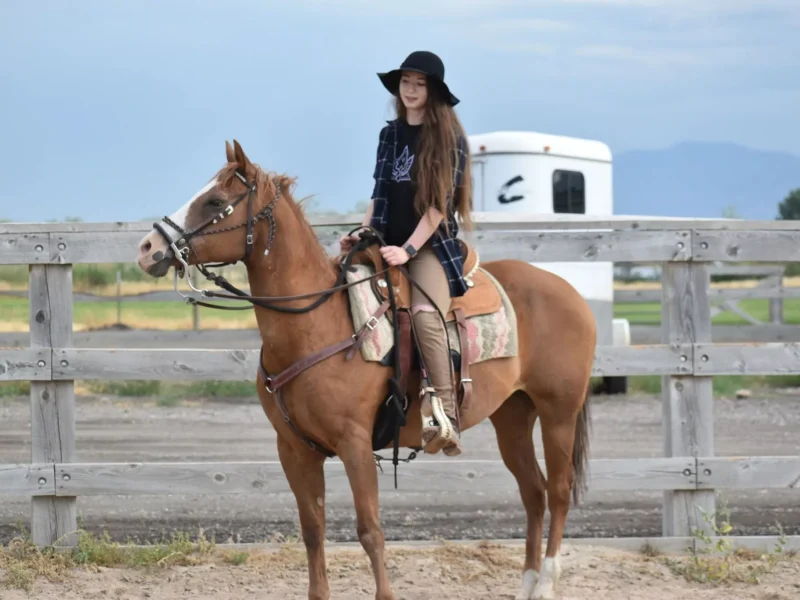
Your first horse riding lesson is a chance to meet your horse, learn basic riding skills, and experience the joy of being in the saddle. Before arriving at Riders of the Mark, you may wonder what clothing and equipment you need.
You do not need an expensive riding wardrobe for your first lesson. Most beginners can wear simple clothes they already own. The goal is to choose items that fit well, protect your body, and allow you to move freely.
This guide explains what to wear, what to avoid, and how to prepare for a safe and enjoyable first lesson.
Wear Long Pants That Let You Move Comfortably
Long pants are one of the most important things to wear during a horse riding lesson. They protect your legs from rubbing against the saddle, stirrup leathers, branches, dirt, and the horse’s coat.
Choose pants that are comfortable and slightly fitted. They should allow you to bend your knees, move your hips, and sit naturally in the saddle. Stretchy jeans, leggings, riding tights, or athletic pants can work well for a beginner lesson.
Avoid pants that are very loose or baggy. Extra fabric may twist, bunch up, or catch on parts of the saddle. Shorts are also not a good choice because they leave your legs exposed and can lead to uncomfortable rubbing.
Before leaving home, sit down and bend your knees while wearing your chosen pants. If the fabric feels tight, stiff, or uncomfortable, select a different pair. You should be able to move without feeling restricted.
Choose Closed-Toe Shoes With a Small Heel
Proper footwear helps protect your feet around horses and keeps them more secure in the stirrups. Wear closed-toe shoes or boots with a firm sole and a small heel.
The heel helps prevent your foot from sliding too far through the stirrup. Shoes with smooth soles, open toes, or very thick tread may create safety concerns while riding.
Good beginner footwear may include:
- Riding boots
- Paddock boots
- Cowboy boots with a suitable heel
- Sturdy ankle boots
- Other closed-toe boots approved by your instructor
Avoid sandals, flip-flops, high heels, slippers, and open-back shoes. Running shoes may also be less suitable because many styles do not have the small heel recommended for riding.
Your footwear should fit securely without pinching your toes. Remember that you may spend time walking around the barn, learning how to approach your horse, or practicing basic care before and after the lesson.
Dress for the Weather and Riding Environment
Horse riding lessons may take place indoors or outdoors, depending on the school, facility, and weather. Dressing in light layers makes it easier to adjust throughout your visit.
On warm days, choose a breathable shirt that allows air to move through the fabric. A simple T-shirt or lightweight long-sleeve top can keep you comfortable while protecting your skin.
During cooler weather, wear layers that fit close to your body. A fitted sweatshirt, light jacket, or warm riding vest may be helpful. Avoid long scarves, loose coats, and clothing with hanging cords that could catch on equipment.
If rain is possible, ask the riding school whether your lesson will continue and what clothing they recommend. A water-resistant jacket may be useful, but it should not flap or hang loosely around your body.
You may also want to bring sunscreen, especially during outdoor lessons. Applying sunscreen before arriving can protect your face, neck, and other exposed areas.
Wear an Approved Riding Helmet
A properly fitted riding helmet is an essential piece of safety equipment. It helps protect your head if you lose your balance, fall, or experience an unexpected movement from the horse.
Many horse riding schools provide helmets for beginner students. Contact Riders of the Mark before your lesson to find out whether a helmet will be available or whether you need to bring one.
Do not replace a riding helmet with a bicycle helmet, baseball helmet, or other type of head protection. Riding helmets are specially designed and tested for equestrian activities.
Your helmet should sit level on your head and feel secure without causing pain. The chin strap should be fastened correctly, and the helmet should not slide forward, backward, or from side to side.
If you continue taking lessons, your instructor can help you understand what to look for when purchasing your own helmet.
What Should You Avoid Wearing?
Some clothing may seem comfortable at home but can become distracting or unsafe near horses. Before your first lesson, leave these items behind:
- Open-toe shoes or sandals
- Shorts or skirts
- Loose jewelry
- Long necklaces
- Large hoop earrings
- Scarves or flowing clothing
- Shirts with hanging strings
- Very baggy pants
- Clothing that limits movement
- Headphones or earbuds
Tie back long hair so it stays away from your face and fits comfortably under a helmet. Use a simple hair tie rather than a large clip, which may press against the helmet.
Keep jewelry to a minimum. Rings, bracelets, and necklaces can catch on clothing or equipment. It is better to store valuable items safely before entering the riding area.
Prepare for a Comfortable First Lesson
You do not need to look like an experienced rider on your first day. Clean long pants, safe boots, a comfortable shirt, and an approved helmet are usually enough to help you begin.
Bring a bottle of water, arrive a few minutes early, and let your instructor know about any concerns or physical limits. Listening carefully and asking questions will help you feel more relaxed.
At Riders of the Mark, your first lesson is about learning at a comfortable pace and building a positive connection with horses. Once you are dressed safely, you can focus on meeting your horse, developing new skills, and enjoying your time in the saddle.
Ready to begin your riding journey? Contact Riders of the Mark to learn more about available lessons and book your first horseback riding experience.